
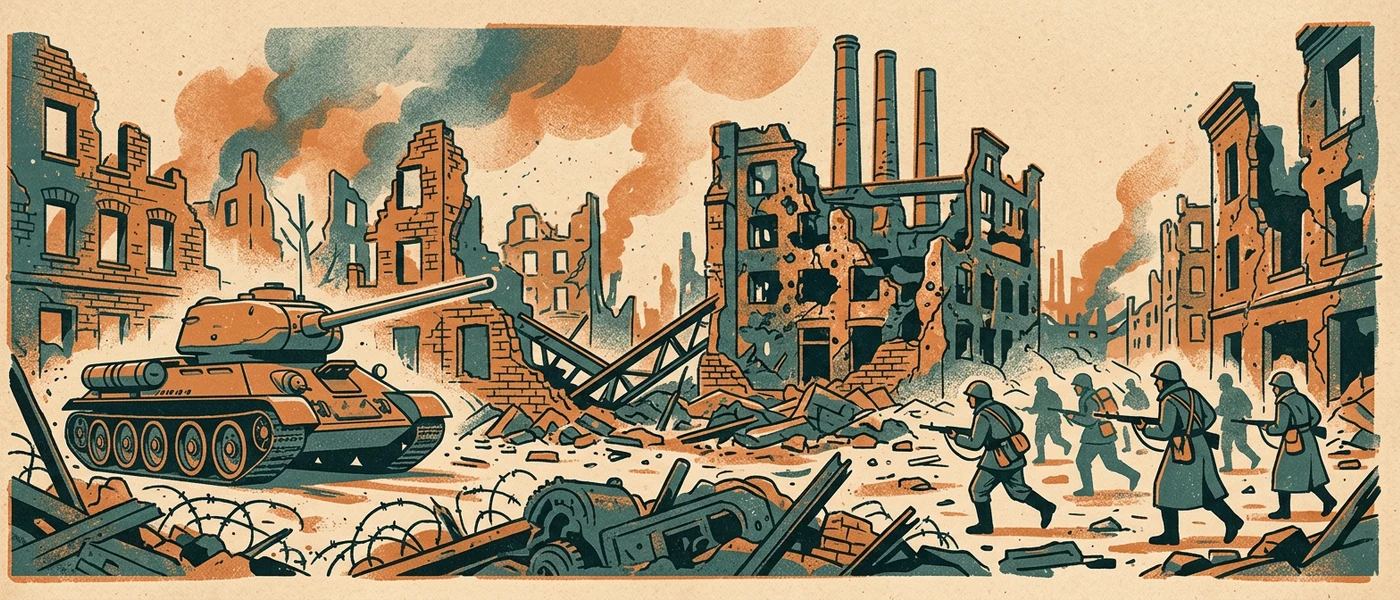
Soviet Production and Logistical Mobilization
In 1942, the Soviet Union built more than 24,000 armored fighting vehicles—while fighting on its own soil. Germany, the military powerhouse of Europe, built about 6,000. That gap mattered enormously at Stalingrad.
Here's why: when Hitler invaded in 1941, the Soviets did something desperate and brilliant. They packed up entire factories—machines, workers, blueprints—loaded them onto trains, and shipped them east to the Urals, far beyond German bombers' reach. These relocated plants became production facilities that ran 24 hours a day, six days a week. The Chelyabinsk tractor works grew so large that it was nicknamed Tankograd, "Tank City." The workers—many of them women, since men were at the front—lived in barracks and worked shifts that never stopped.
But tanks sitting in the Urals don't win battles. The Soviets built supply lines—networks of roads, railways, and depots—that moved ammunition, fuel, food, and replacement parts to the front. When the Red Army counterattacked at Stalingrad in November 1942, those supply lines fed the assault. The Germans, stretched thin and far from home, couldn't match that flow.
Germany won battles through speed and skill. The Soviets won through sheer, relentless output. By outproducing the enemy and delivering supplies where they mattered most, the Red Army turned a desperate city into the place where German momentum stopped cold.
