
Operation Barbarossa and the Eastern Front
German tanks are rolling across the Ukrainian steppe in the summer of 1941, crushing Soviet defenses in their path. Millions of soldiers clash across a front that stretches over a thousand miles. This is Operation Barbarossa—and it's the moment everything changes. But why would Hitler risk invading his former ally? And what does this have to do with a city called Stalingrad?
Hitler believed the Soviet Union held the resources Germany needed: oil, grain, and living space for German settlers. He also saw Communism as an existential threat to his vision of Europe. So on June 22, 1941, he launched Operation Barbarossa, the code name for Germany's invasion of the Soviet Union—the largest military invasion in history. The Eastern Front, as it came to be called, was the main theater where Germany would fight the Soviets.
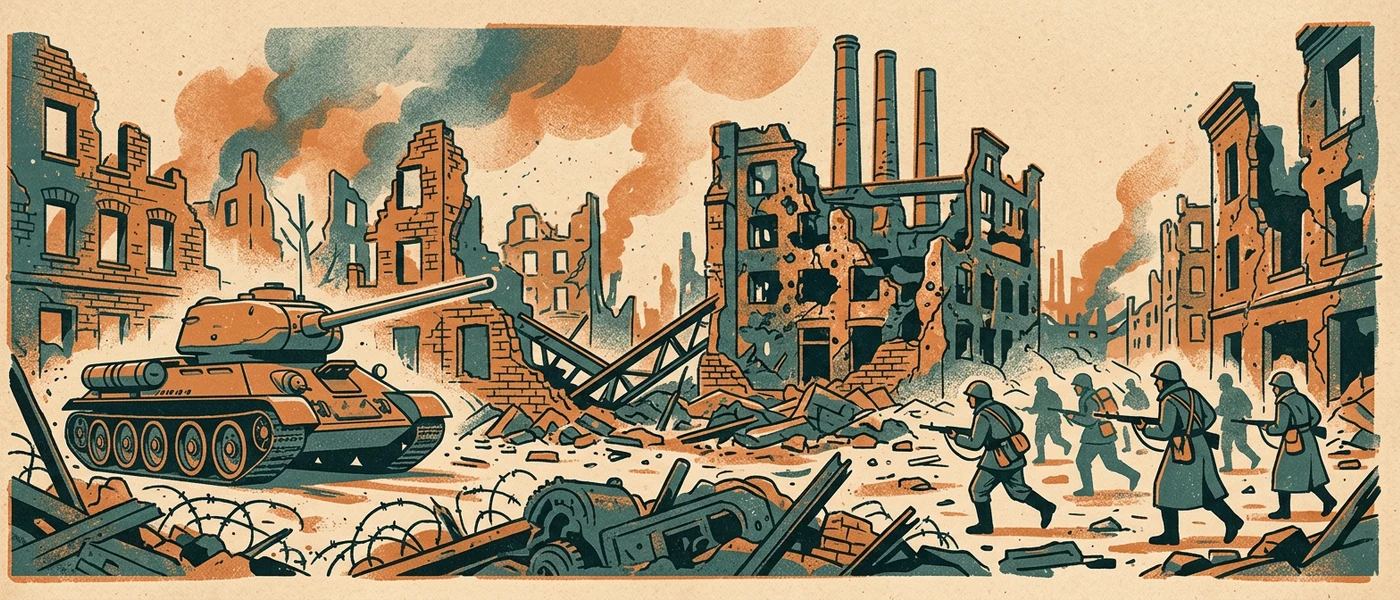
At first, German forces advanced rapidly. But the Soviet Union was vast, and by December 1941 the German drive had stalled at the gates of Moscow. So in June 1942 Hitler launched a new summer offensive in the south, aimed at Soviet resources and the oil fields of the Caucasus. Stalingrad—a major industrial city on the Volga River—now became a target. Capturing it would cut Soviet transport links with southern Russia and anchor the flank of the drive toward the oil. The city also bore Stalin's name, which made it a propaganda prize.
The invasion of the Soviet Union was driven by Hitler's hunger for resources and his hatred of Communism, and Stalingrad became the crucial battle where that strategy would be tested to its breaking point.
