
Urban Warfare and House-to-House Fighting
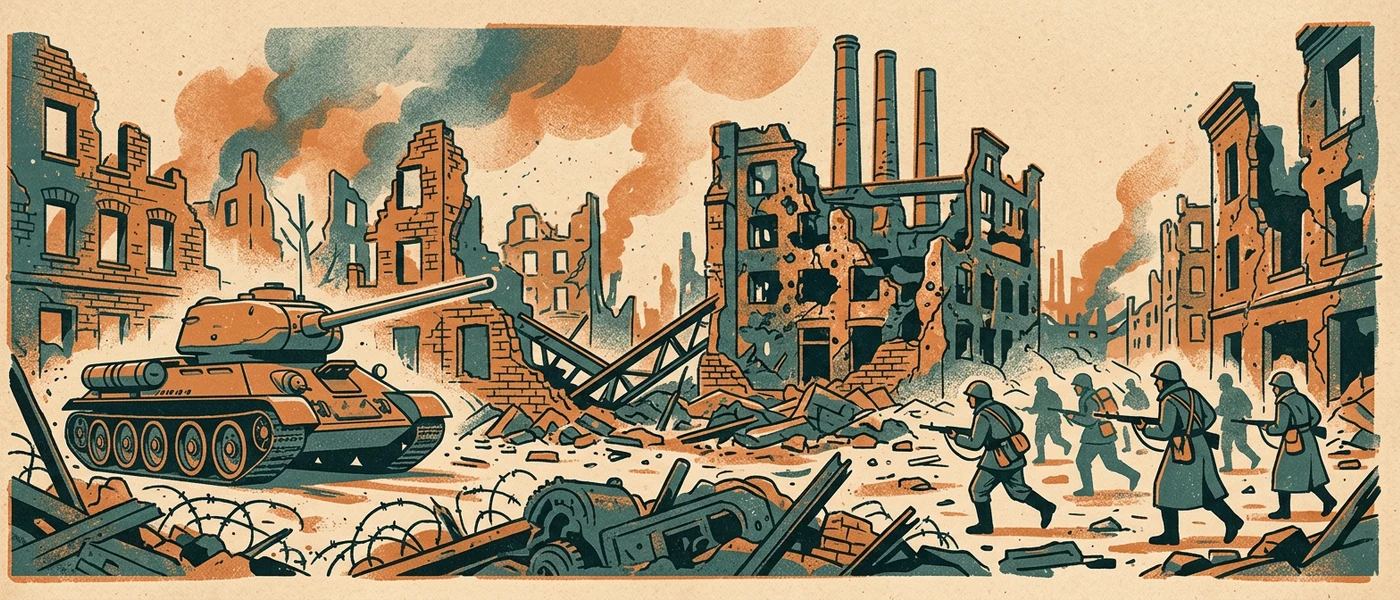
At the height of the Battle of Stalingrad, in the autumn of 1942, soldiers fought across rubble separated by distances you could throw a stone—sometimes just 20 or 30 meters between German and Soviet lines. This wasn't the sweeping cavalry charges or tank columns you might imagine from other battles. Instead, the city itself became the weapon: every building a fortress, every stairwell a chokepoint, every room a separate fight.
House-to-house fighting means soldiers advance street by street, building by building, clearing each structure of enemy troops before moving forward. In Stalingrad, Soviet defenders dug into apartment blocks and factories, while German attackers had to root them out room by room. A single ruined building could take hours or days to capture. Soldiers threw grenades through windows, kicked down doors, and fought with bayonets in hallways. There was no safe distance, no way to avoid the enemy—just grinding, brutal attrition where both sides paid a terrible price for every meter of ground.
The fighting for the city lasted from late August 1942 until the last German troops surrendered on February 2, 1943. Attrition is when both armies keep fighting until one side simply runs out of soldiers or supplies to continue. In open country, generals could outmaneuver opponents; in Stalingrad's ruins, there was nowhere to outmaneuver anyone. The city's destruction—collapsed walls, rubble blocking streets—actually favored the defender, who knew the terrain and could set ambushes. The Germans, who expected fast-moving tank warfare, found themselves in a meat grinder where numbers and willingness to absorb casualties mattered more than speed or strategy. This grinding urban battle fundamentally changed how modern armies think about fighting in cities.
