
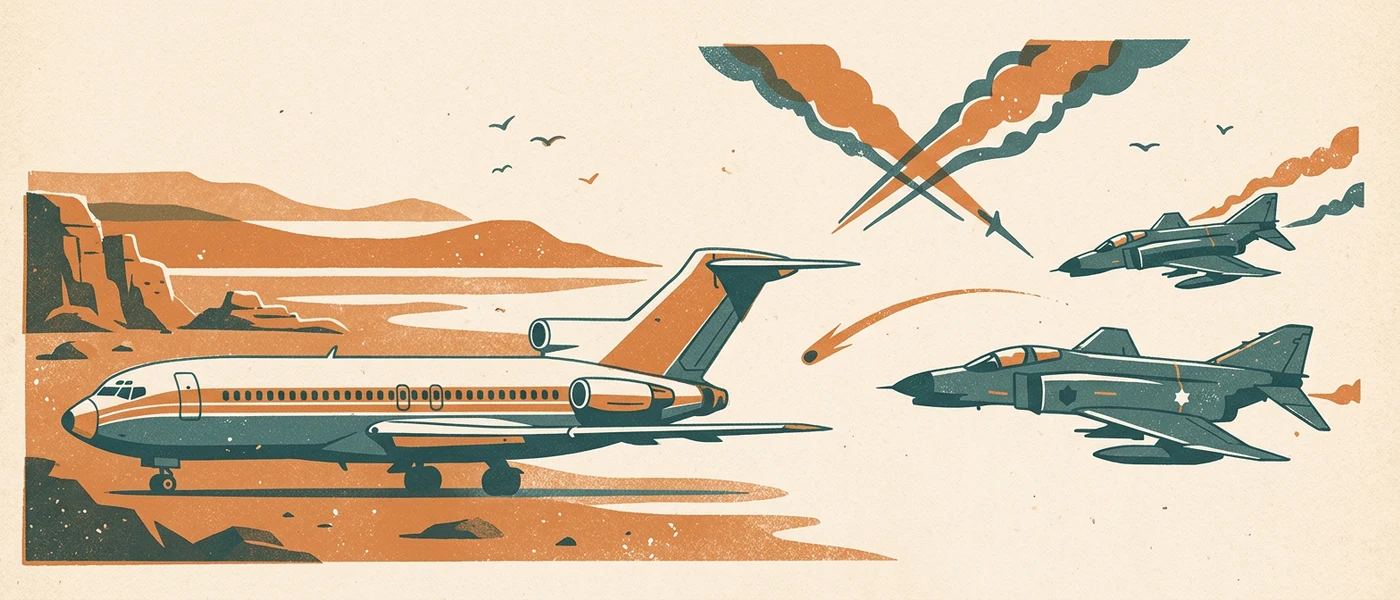
The Libyan Airlines Flight 114 Downing
On February 21, 1973, Israel's air force shot down a passenger plane carrying 113 people over the Sinai Desert. The aircraft was Libyan Airlines Flight 114, a commercial jet with families, businesspeople, and ordinary travelers aboard. What makes this stark: it happened during peacetime, not in the heat of active combat. The plane had strayed off course into airspace over Israeli-occupied Sinai, but it was unarmed and filled with innocent people.
The context matters. Israel had held Sinai since the 1967 war, and although a 1970 ceasefire had ended open fighting along the Suez Canal, Israel and Egypt were still enemies. The Yom Kippur War would not begin until October 1973, eight months later. Israeli military commanders were on high alert. When radar picked up an unidentified aircraft crossing the Gulf of Suez toward an Israeli air base, they saw a potential threat. The crew believed they were close to Cairo, and no one in Israel knew the plane's intentions.
Israeli fighter jets scrambled and tried to force the airliner to land. The pilot didn't understand the signals or couldn't comply in time. Within minutes, the jets fired. The plane crashed, killing 108 of the 113 people aboard. Five people survived.
The incident shattered international airspace law norms. Nations had agreed that civil aviation must be protected—that shooting down a passenger plane was unthinkable. Israel claimed self-defense; the world called it a tragedy. The downing exposed how fragile those protections were when fear and military tension override them.
This event became a turning point in how the world viewed civilian aircraft safety and military responsibility during regional conflicts.
