
What Is Civil Aviation?
Civil aviation means commercial and private aircraft that carry passengers or cargo for peaceful purposes—not military planes built to fight wars. The key difference is legal: a civilian airliner belongs to a country's people and businesses, while a military jet belongs to a country's armed forces.
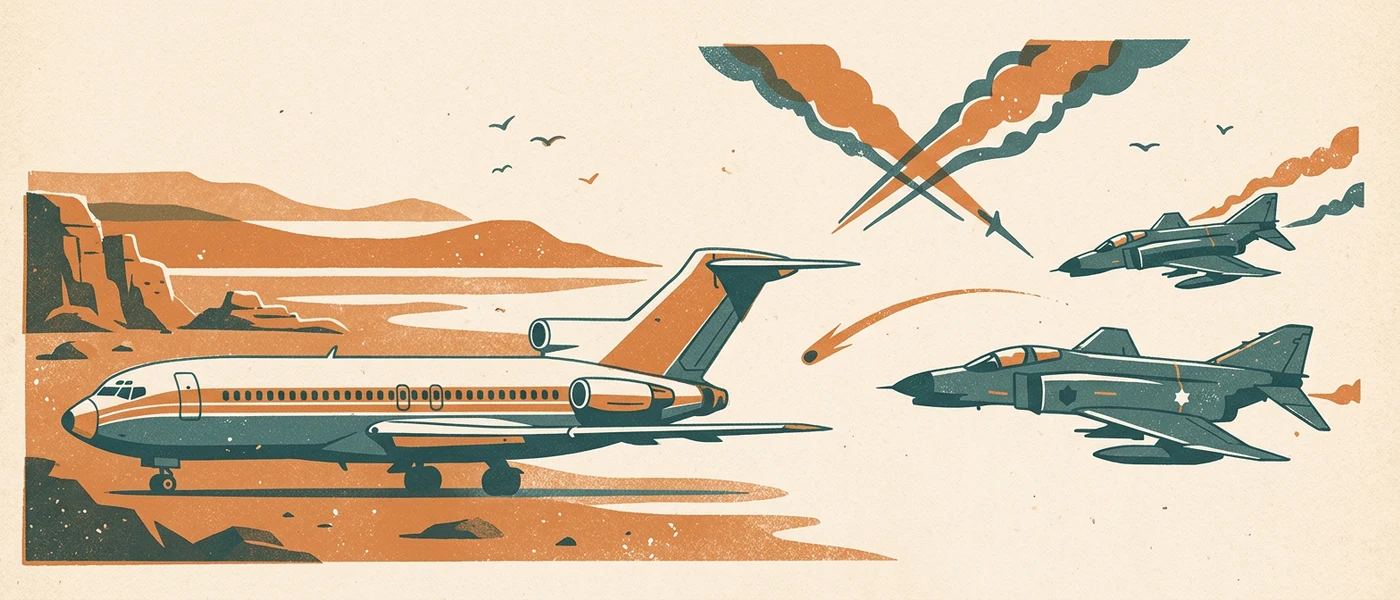
On February 21, 1973, a Libyan passenger plane flying from Tripoli to Cairo by way of Benghazi strayed off course over the Sinai Peninsula, Egyptian territory then occupied by Israel. Israel's military jets intercepted it. The pilots of that civilian airliner—a Boeing 727 carrying 113 people—were lost and didn't know exactly where they were. Israeli fighters shot it down, killing 108 people on board. That disaster happened because the plane was civilian, unarmed, and full of ordinary travelers, yet it was treated as a military target.
International law exists precisely because of events like this. Today the Chicago Convention, the treaty that governs international civil aviation, says every country must refrain from using weapons against civil aircraft in flight; that clause was added in 1984. The laws of war, including the Geneva Conventions, also protect civilians. A civilian plane has no weapons and no soldiers—it's carrying doctors, families, students, businesspeople. Military planes, by contrast, are designed to fight and carry weapons.
Understanding this difference matters because it shapes how nations treat each other in the air. Civil aviation is protected; military aviation is not. That protection—and the rules behind it—came from learning hard lessons about what happens when the line between the two gets blurred or ignored.
