
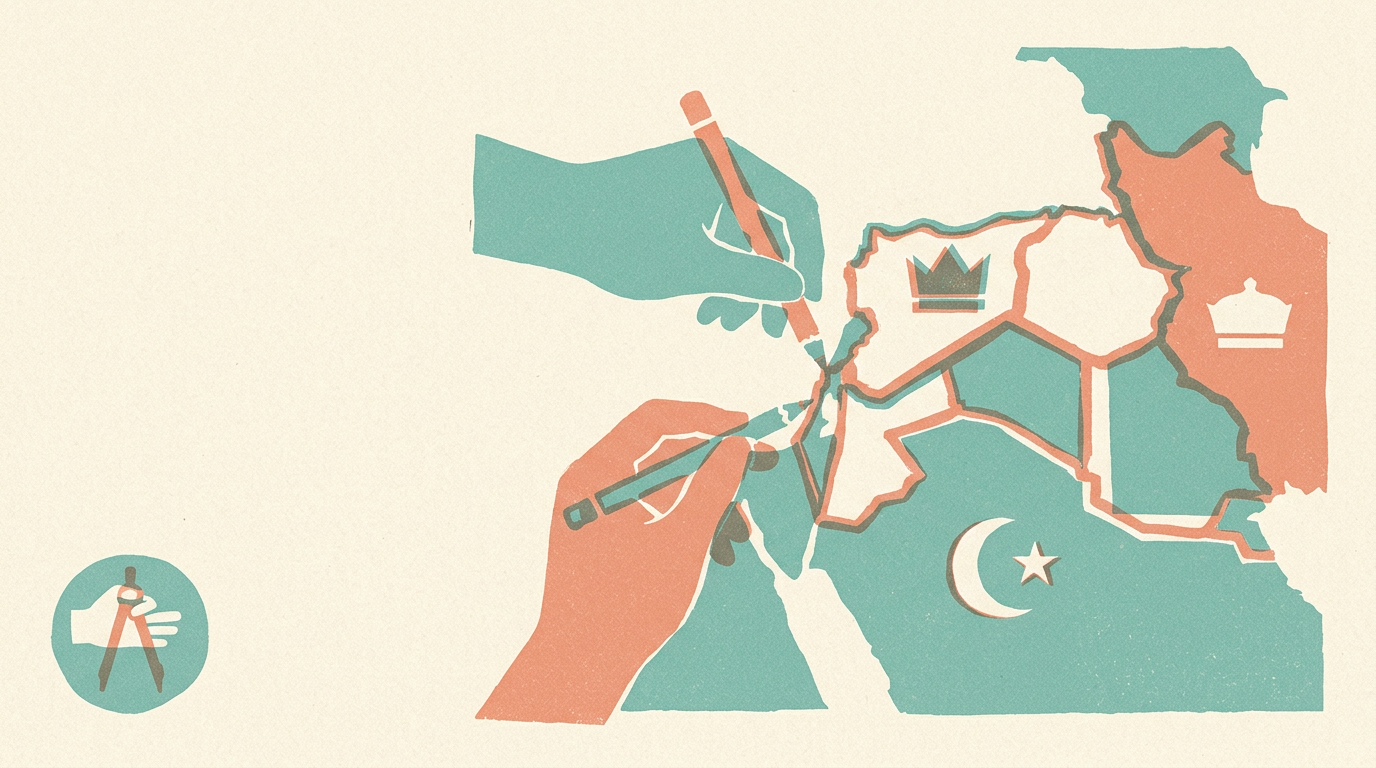
Sykes-Picot Agreement
@meirrosenschein invited you
Covers What Was Sykes-Picot?, Colonial Competition During WWI, How Sykes-Picot Divided the Map and more.
“Sykes-Picot Agreement” is a 4-lesson course at Teen level, created with soclever, a personal AI teacher. Each lesson takes a few minutes and ends with a check-in question; finish the curriculum and you can take a certificate test to earn a diploma. Try the first lesson without an account — or make your own course on any topic. Shared by @meirrosenschein.
What you'll learn
- What Was Sykes-Picot?. Picture this: it's 1916, World War I is raging, and two powerful countries—Britain and France—are sitting in a room drawing lines on a map of the Middle East.
- Colonial Competition During WWI. Picture two hungry diners eyeing the last slice of cake on the table—except the cake is an entire empire, and the diners are Britain and France during World War I.
Lesson 1: What Was Sykes-Picot?
Picture this: it's 1916, World War I is raging, and two powerful countries—Britain and France—are sitting in a room drawing lines on a map of the Middle East. They're not asking anyone who actually lives there what they think. They're just dividing up territory like kids splitting a pizza, except this pizza is made of millions of people's homes and futures. That secret handshake moment became known as the Sykes-Picot Agreement, and it shaped the entire region for the next century.
Here's the setup. The Ottoman Empire—a massive kingdom that had ruled the Middle East for hundreds of years—was falling apart during World War I. Britain and France, allies fighting against Germany and the Ottomans, realized they could grab the Ottoman's Middle Eastern lands for themselves. So in 1916, two diplomats named Mark Sykes (British) and François Georges-Picot (French) made a secret deal: Britain would control some territories, France would control others, and they'd carve out a shared zone in the middle.
Why does this matter? Because these lines didn't follow the actual communities, religions, or cultures of the people living there. They were drawn by outsiders for outsiders' profit. When the Ottoman Empire finally collapsed after the war, Britain and France used Sykes-Picot as their blueprint. The borders they created still exist today, and many conflicts in the Middle East trace back to this one secret agreement that ignored what local people actually wanted.
Questions this course answers
- What two countries made the Sykes-Picot Agreement, and what did they agree to do?
- Why did Britain and France want to control Ottoman lands during World War I—what three things were they really after?
- What are the main ideas behind how Sykes-Picot Divided the Map?
- What are the main ideas behind From Broken Promises to Today's Instability?
More courses to explore
- Sykes Picot Agreement Explained — 4 lessons (Teen level).
- NBA playoffs — Intermediate — 4 lessons (Hands-on level).
- Fall of Berlin Wall — 4 lessons (Teen level).
- Caviar Types and Origins — 4 lessons (Pro level).