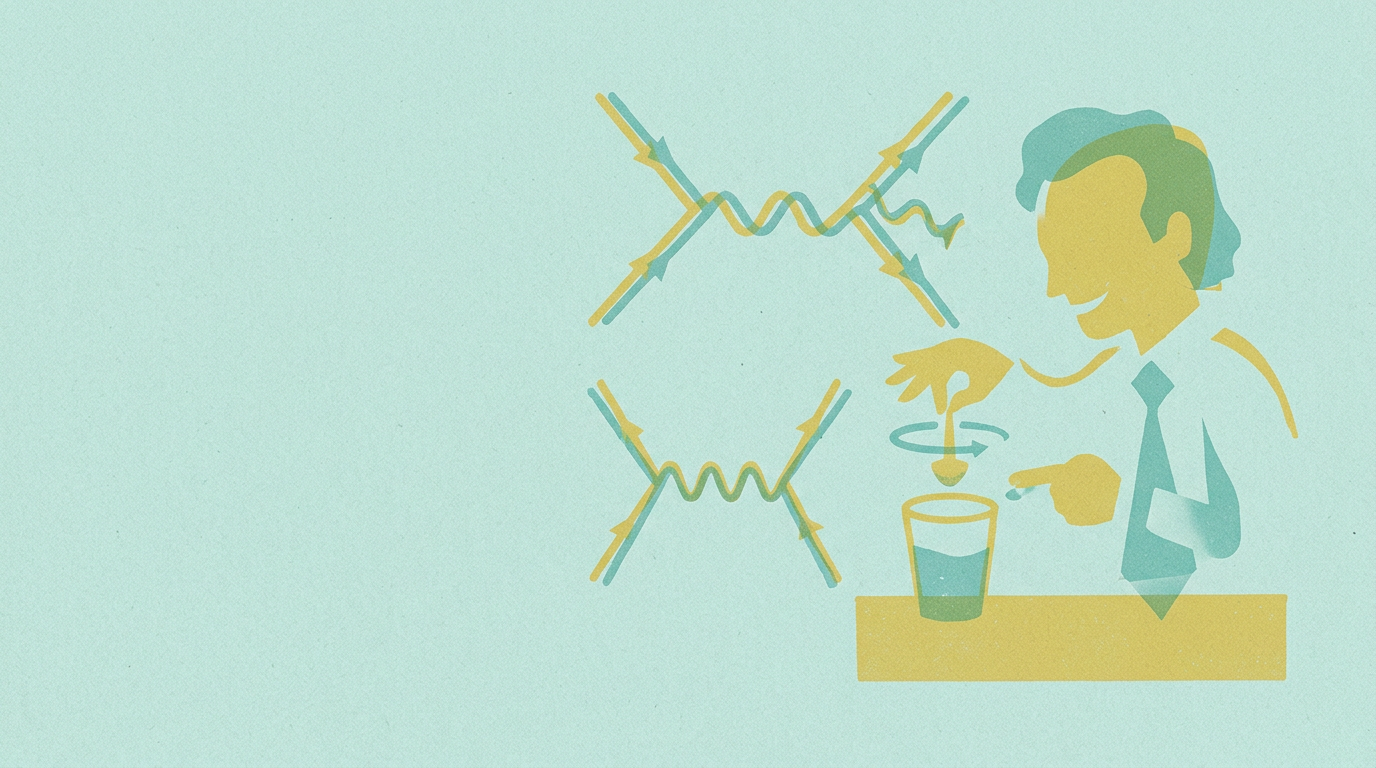
Key lessons from Richard Feynman in his style
You'll recognize the three pillars of Feynman's approach: radical curiosity, ruthless simplification, and honest admission of what you don't know.
You'll apply the Feynman Technique to break down a real concept, using plain language and identifying gaps where your understanding fails.
You'll learn to detect cargo cult thinking in yourself and others by recognizing jargon masquerading as knowledge and testing claims from first principles.
You'll commit to one daily habit that embodies Feynman's style: asking 'why' relentlessly, embracing uncertainty, and explaining ideas as if teaching a curious child.
You'll grasp Feynman's playful yet rigorous view of physics, understanding how he made quantum mechanics and electrodynamics feel intuitive rather than intimidating.
You'll see how Feynman treated math as a tool for understanding reality, not an end in itself, and why he insisted on connecting every equation to a physical picture.
You'll explore Feynman's fascination with life at the molecular level and how he applied a physicist's first-principles thinking to genetics and the machinery of cells.
You'll discover how Feynman pioneered ideas in quantum computing and parallel processing, and why he believed understanding computation was key to understanding nature.
You'll understand the vision behind Feynman's legendary 'There's Plenty of Room at the Bottom' talk and why it laid the conceptual groundwork for an entire field.
You'll articulate Feynman's views on what science is and isn't, including his sharp critiques of pseudoscience, authority, and the difference between knowing a name and knowing a thing.
You'll appreciate how Feynman argued that scientific understanding adds to — rather than subtracts from — the beauty of a flower, a rainbow, or a piece of music.
You'll identify the core flaws in rote learning that Feynman criticized and explain his alternative: teaching for genuine understanding by starting from curiosity and concrete experience.