
Day One: Get Job-Ready For The AI Age
@jjea invited you
Lessons16 lessons
Media
Quiz
Final assessmentAfter the last lesson, for your diploma
About
“Day One: Get Job-Ready For The AI Age” is a 16-lesson course at Teen level, created with soclever, a personal AI teacher. Each lesson takes a few minutes and ends with a check-in question; finish the curriculum and you can take a certificate test to earn a diploma. Try the first lesson without an account — or make your own course on any topic. Shared by @jjea.
What you'll learn
- Welcome to the Course. You just got handed a project at work with almost no detail: "Research our competitor's pricing strategy and come back with recommendations." You stare at it for ten minutes.
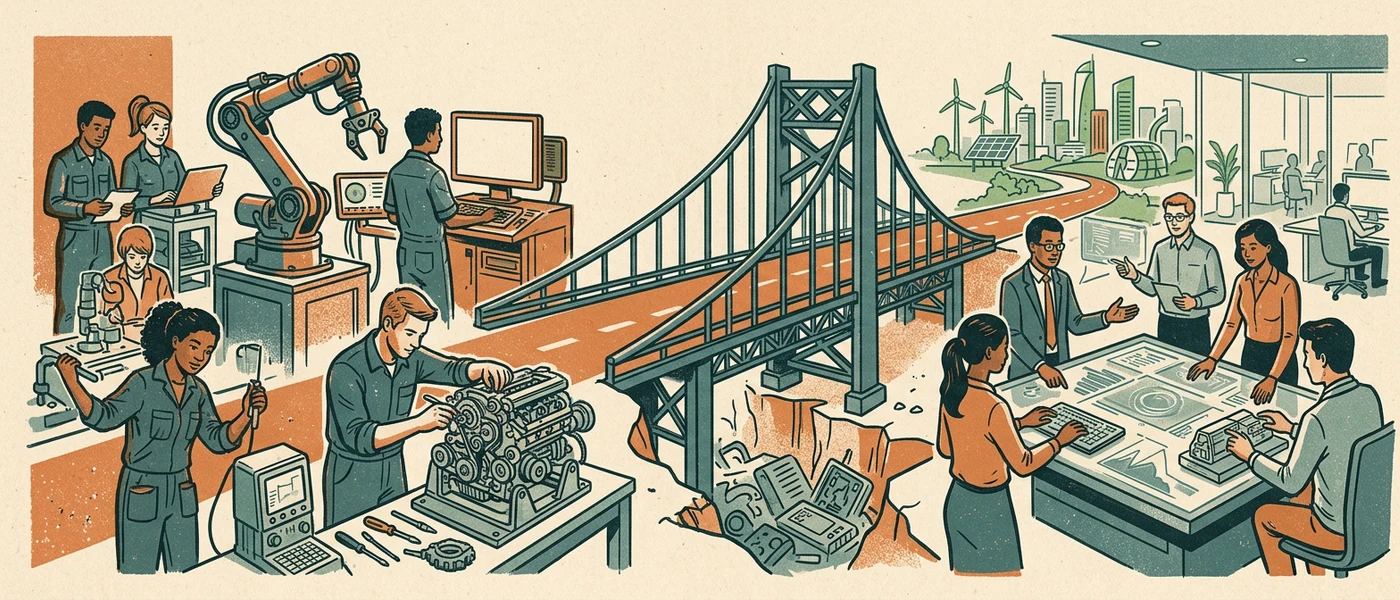
- How Automation Changes Jobs. Manufacturing plants started replacing assembly-line workers with robots in the 1980s.
- The AI Apprenticeship Gap. Your career depends on learning through doing.
- Working Alongside AI Tools. The gap you already know about—the AI apprenticeship gap—happens because task automation removes junior work. But that's only a problem if you treat AI as competition.
- Your Upskilling Roadmap. By 2025, 50% of entry-level analytical roles will vanish due to AI automation. That's not a prediction—it's the AI apprenticeship gap already reshaping hiring.
- Work Like an Associate. Your manager hands you a project: "Improve our customer retention." What do you actually do first?
- AI as Your Junior Team. Most people treat AI like a search engine—they ask it a question and take whatever answer comes back. That's backwards.
- Research & Verification. AI will confidently tell you things that aren't true. That's not a flaw you'll fix—it's a permanent feature you have to work around.
- Analysis & Problem Solving. Problem solving at work means breaking a messy situation into clear pieces, gathering relevant data, spotting what actually matters, and building a recommendation you can defend.
- Business Writing. Your job is to make someone understand your point in under two minutes. Business writing strips away everything that isn't essential—no storytelling, no cushioning, no filler.
- Presentations & Storytelling. Most professionals spend 20 minutes on a slide deck that will be seen by 15 people for 30 minutes total—yet that half-hour often shapes decisions worth thousands of dollars.
- Automation & Productivity. You probably think automation means doing less work. It doesn't. Automation means spending less time on repetitive work so you can do more of the work that matters.
Questions this course answers
How did manufacturing plants start changing jobs in the 1980s?
Manufacturing plants started replacing assembly-line workers with robots in the 1980s.
What kind of work does automation target?
Automation targets repetitive, rule-based work.
What percent of entry-level analytical roles will vanish due to AI automation by 2025?
By 2025, 50% of entry-level analytical roles will vanish due to AI automation.
What does business writing strip away?
Business writing strips away everything that isn't essential.
More courses to explore
- Age of Exploration Explained — 4 lessons (Teen level).
- The Age of Colonial America — 4 lessons (Teen level).
- Fall of Rome — 4 lessons (Teen level).
- Advanced International Tax Planning — 10 lessons (Postgrad level).