
NBA Playoffs Explained for Beginners
A learner invited you
Covers NBA Playoffs Format & Seeding, What to Watch For During Games, LeBron James: Playoff Excellence Explained and more.
“NBA Playoffs Explained for Beginners” is a 4-lesson course at Teen level, created with soclever, a personal AI teacher. Each lesson takes a few minutes and ends with a check-in question; finish the curriculum and you can take a certificate test to earn a diploma. Try the first lesson without an account — or make your own course on any topic.
What you'll learn
- NBA Playoffs Format & Seeding. Most people think the NBA playoffs are a free-for-all where any team can face any other team. That's wrong.
- What to Watch For During Games. The point guard just dribbled to the top of the key and the defense shifted—two big guys moved toward him while his teammates spread out along the perimeter.
- LeBron James: Playoff Excellence Explained. LeBron has played 277 playoff games—more than any player in NBA history. That number matters because it tells you something: he doesn't shrink when stakes rise.
- Joel Embiid: Big Man Dominance Today. A dominant big man is a center who can score from anywhere on the court and doesn't just camp near the basket.
Lesson 1: NBA Playoffs Format & Seeding
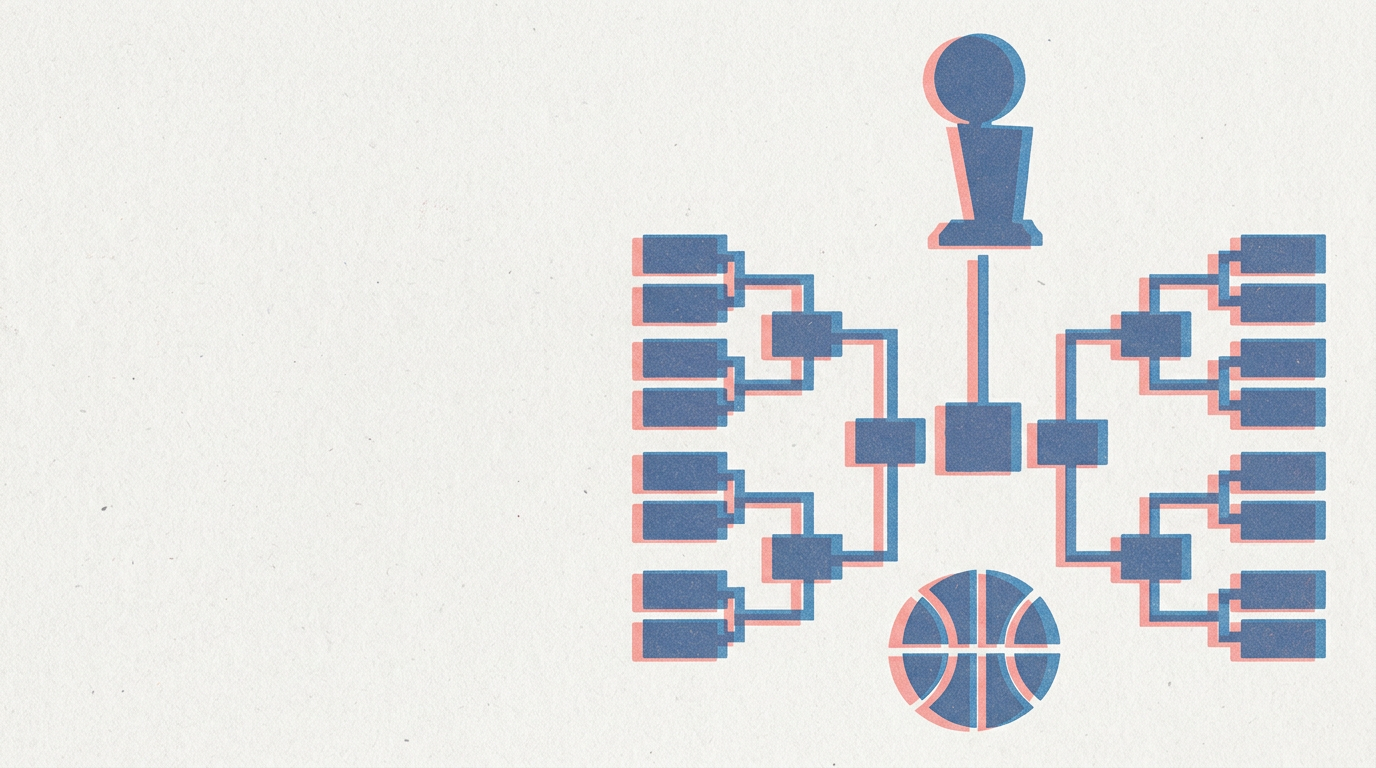
Most people think the NBA playoffs are a free-for-all where any team can face any other team. That's wrong. The bracket is locked in by seeding, which means the 1 seed plays the 8 seed, the 2 seed plays the 7 seed, and so on. This happens in each conference separately—Eastern and Western—so 16 teams total make the playoffs: the top 8 from each conference.
Seeding is determined by regular season record. The team with the best record becomes the 1 seed, the second-best becomes the 2 seed, and it cascades down. If you finish anywhere from 1st to 8th in your conference, you're in. Finish 9th and you're watching from home.
Why does this matter before you even turn on a game? Because the first round is designed to give top seeds an edge. The 1 seed faces the weakest team that made it (the 8 seed), the 2 faces the 7, and so on. This isn't random—it's the payoff for winning games all season. The Golden State Warriors, for example, finished 1st in the West in 2022 and got to face the 8 seed Denver Nuggets in round one. That matchup was predetermined the moment the regular season ended.
The bracket doesn't reshuffle after the first round. Winners advance and face the next seed in the predetermined order. So a 1 seed could eventually face a 5 seed in the second round if both teams keep winning. The structure is fixed; only the outcomes are unknown.
Questions this course answers
How many teams make the NBA playoffs and how are they divided?
16 teams total make the playoffs: the top 8 from each conference. This happens in each conference separately—Eastern and Western.
What happens if a team finishes 9th in their conference?
If you finish 9th you are watching from home.
Why does the first round of the playoffs give top seeds an edge?
The first round is designed to give top seeds an edge because the 1 seed faces the weakest team that made it (the 8 seed), the 2 faces the 7, and so on.
What is the most important offensive play in the playoffs?
A pick-and-roll is the most important offensive play in the playoffs, where the point guard dribbles to the top of the key and the defense shifts.
More courses to explore
- NBA playoffs — Intermediate — 4 lessons (Hands-on level).
- Science of Sleep Explained — 4 lessons (Teen level).
- Age of Exploration Explained — 4 lessons (Teen level).
- The Wire — 4 lessons (Teen level).