
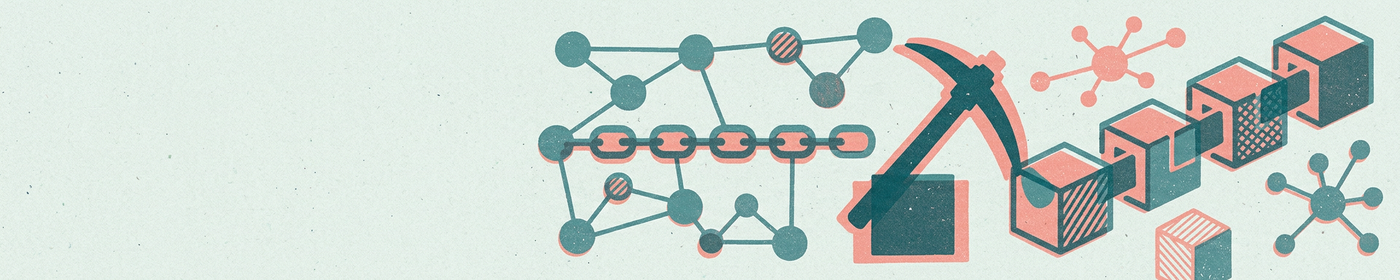
How Does Bitcoin Actually Work
Covers The Double-Spend Problem, How Blockchain Solves Trust, Proof of Work and Mining and more.
“How Does Bitcoin Actually Work” is a 4-lesson course at Teen level, created with soclever, a personal AI teacher. Each lesson takes a few minutes and ends with a check-in question; finish the curriculum and you can take a certificate test to earn a diploma. Try the first lesson without an account — or make your own course on any topic.
What you'll learn
- The Double-Spend Problem. In 1982, computer scientist David Chaum published a paper on digital cash and ran headlong into a wall: if money is just data, what stops you from copying it and spending it twice?
- How Blockchain Solves Trust. In 2008, someone using the name Satoshi Nakamoto published a paper describing a problem: how do strangers transfer money to each other without a bank sitting in the middle to verify the transaction is real and that you're not spending the same dollar twice?
- Proof of Work and Mining. Bitcoin's ledger is kept secure by a system that makes it harder to break the rules than to follow them—and the harder part costs real money.
- Bitcoin Transactions End-to-End. Say Alice wants to send one bitcoin to Bob. She opens her wallet software and enters Bob's address and the amount. What happens next isn't magic—it's a chain of concrete steps.
Lesson 1: The Double-Spend Problem
In 1982, computer scientist David Chaum published a paper on digital cash and ran headlong into a wall: if money is just data, what stops you from copying it and spending it twice? Hand someone a dollar bill and it's gone from your pocket. Send them a file and you still have the file. That gap—between physical scarcity and digital copyability—has haunted digital payment systems ever since.
Before Bitcoin, the only solution was a middleman. Banks, PayPal, credit card companies—they all work the same way. You don't actually exchange digital money with each other. Instead, you both trust a central authority to keep a ledger, to record who owns what, and to prevent you from spending the same money twice. When you send $10, the bank deletes it from your account and adds it to theirs. Problem solved. But you've handed them power: they can freeze accounts, charge fees, censor transactions, or simply disappear with your money.
Bitcoin solved this differently. Instead of one trusted middleman, it used cryptography and a distributed network of computers all keeping the same ledger. No single entity controls it. Every node verifies transactions using math, not trust. The ledger—the blockchain—is public and tamper-proof. You can't spend the same bitcoin twice because the entire network would catch it instantly.
That's the core innovation: replacing trust in an institution with trust in mathematics.
Questions this course answers
What is a blockchain?
A blockchain is a shared ledger that everyone on the network keeps a copy of.
How do nodes validate a transaction?
Nodes validate the transaction using math, then bundle it with other recent transactions into a block.
What is proof of work?
Proof of work requires miners to compete to solve a cryptographic puzzle using enormous computational power, burned through electricity and hardware.
More courses to explore
- How Does ChatGPT Actually Work — 4 lessons (Teen level).
- How Does Weight Loss Actually Work — 4 lessons (Teen level).
- How Bitcoin works — 4 lessons (Teen level).
- Truffle hunting — 4 lessons (Teen level).