
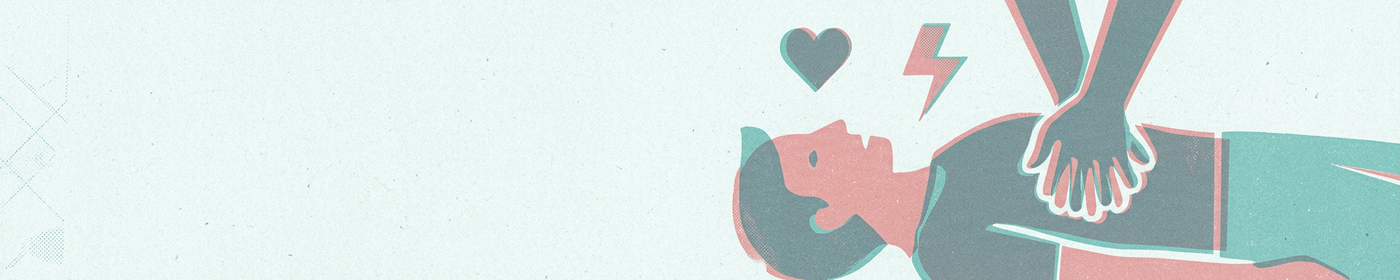
Cardiac Arrest and CPR Response
Covers CPR and AED Together, Why Cardiac Arrest Happens, Care After the Heart Restarts and more.
“Cardiac Arrest and CPR Response” is a 4-lesson course at Teen level, created with soclever, a personal AI teacher. Each lesson takes a few minutes and ends with a check-in question; finish the curriculum and you can take a certificate test to earn a diploma. Try the first lesson without an account — or make your own course on any topic.
What you'll learn
- CPR and AED Together. When someone's heart stops, you have roughly four to six minutes before brain damage begins.
- Why Cardiac Arrest Happens. Your heart is a pump. When everything works, electrical signals fire in an organized rhythm, squeezing the chambers in the right order so blood flows out to your body.
Lesson 1: CPR and AED Together
When someone's heart stops, you have roughly four to six minutes before brain damage begins. That's not much time—and it's exactly why an AED, or automated external defibrillator, exists. It's a machine that reads your heart's rhythm and, if needed, delivers an electric shock to restart it. You and chest compressions alone can keep blood moving to the brain during those critical minutes, but an AED tackles the root problem: a heart that's stopped beating in a chaotic, uncoordinated way.
Here's the partnership that works. Start chest compressions immediately—you already know how to do that. While you're doing them, have someone else fetch the AED. If you're alone, do compressions for a minute, then step away briefly to grab it yourself. The AED is usually mounted on a wall in public spaces: gyms, airports, office buildings, shopping centers.
Once the AED arrives, keep compressions going while someone turns it on. The machine will tell you exactly what to do—it has voice prompts. You'll stick two adhesive pads to the person's bare chest, and the machine analyzes the heart rhythm. If a shock is needed, everyone stands clear, and the AED delivers it. Then you go right back to compressions. You alternate: compressions for about two minutes, then the AED checks the rhythm again.
The machine does the thinking; you do the work. Together, they give that person the best chance.
Questions this course answers
What is an AED?
An AED is a machine that reads your heart's rhythm and, if needed, delivers an electric shock to restart it.
Where are AEDs usually found?
The AED is usually mounted on a wall in public spaces like gyms, airports, office buildings, and shopping centers.
What happens during cardiac arrest?
Cardiac arrest happens when the heart is either not beating or beating so chaotically it might as well not be, leaving the person unconscious and unresponsive.
More courses to explore
- Coordinating a Small Project in Six Weeks — 5 lessons (Teen level).
- How Bitcoin works — 4 lessons (Teen level).
- The Berlin Wall — 4 lessons (Postgrad level).
- Losing weight while busy — 4 lessons (Postgrad level).